

Table of Contents
Why the Background Matters More Than You Think
Your background is the second thing a viewer notices — right after the person speaking. It communicates context before a single word is heard. A cluttered office says chaos. A clean, well-lit space says authority. A branded environment says intentional.
The good news: you don't need a studio. Some of the best interview backgrounds are real, everyday spaces — you just need to know what to look for.
The Best Types of Interview Backgrounds
1. The Office With Depth
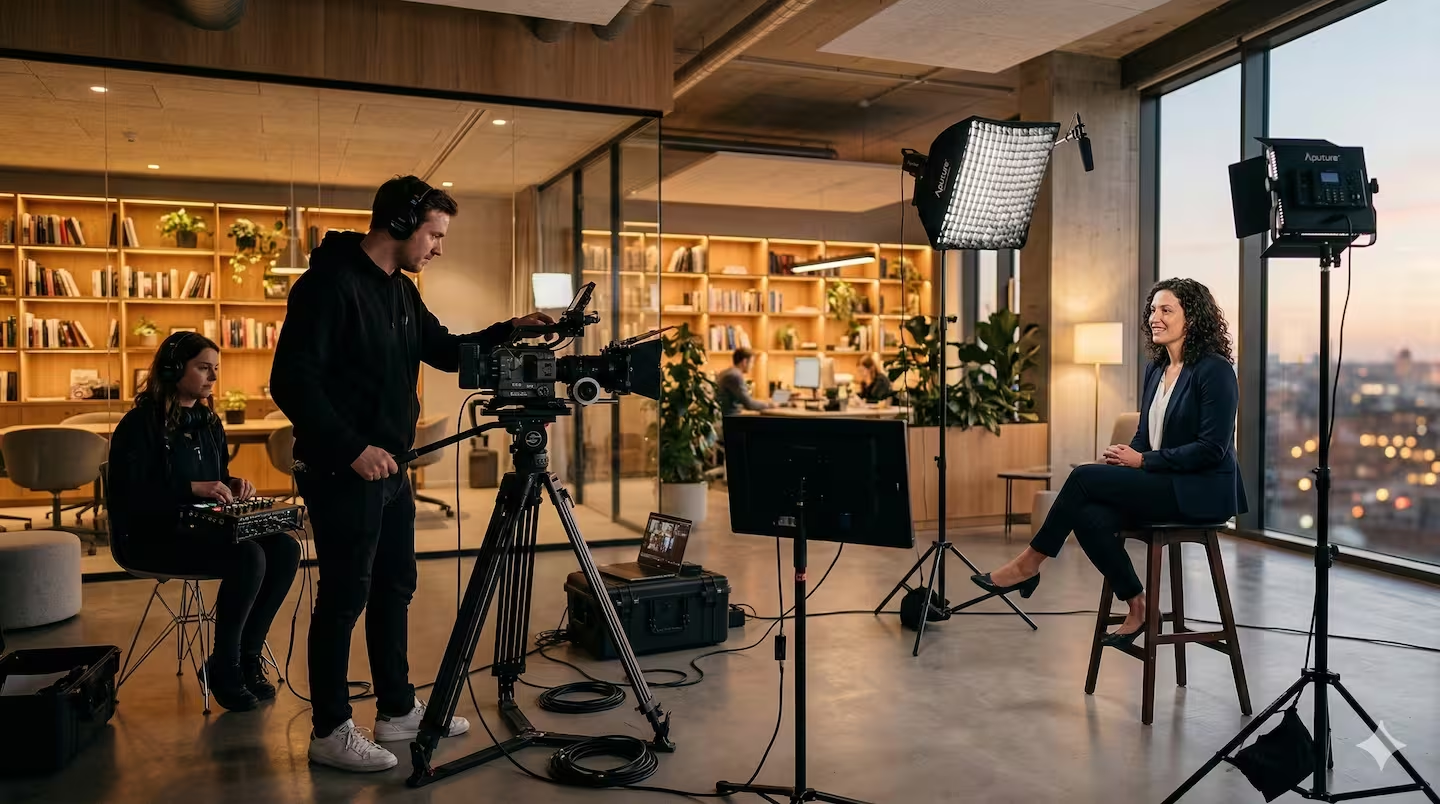
A workspace with visible depth behind the subject — think bookshelves, a window with a city view, or a long hallway fading into soft focus. This is the most common and reliable choice for corporate interviews.
What to look for: Place the subject at least 1.5 to 2 meters away from the back wall. This gives the camera room to create a natural background blur (bokeh) that separates the speaker from the environment and looks cinematic.
Avoid: Sitting the subject flat against a wall. It looks like a passport photo.
2. The Conference Room (Done Right)
Conference rooms can work well, but they need a little effort. Remove clutter from the table, turn off overhead fluorescents if possible, and angle the shot so you're not staring at a blank whiteboard or a TV screen.
Pro tip: If the room has glass walls, watch for reflections and movement outside the room. Either pull the blinds or position the camera to minimize distractions.
3. A Branded or Designed Space
Lobbies, showrooms, and reception areas often feature your company's branding, products, or design aesthetic. These are great for adding identity to the shot without it feeling forced.
What to look for: Logo walls, product displays, or architecture that reflects the company's personality. Make sure branding is visible but not overwhelming — slightly out of focus in the background is ideal.
4. Outdoor Locations
An exterior shot can bring energy and context to an interview, especially for industries like construction, real estate, hospitality, or events. Courtyards, rooftops, or building entrances can all work.
What to watch out for: Wind and ambient noise are your biggest enemies outdoors. Choose sheltered spots, avoid filming near busy roads, and always have a plan for weather changes. A lav microphone is essential.
5. Industrial or Workshop Environments
Warehouses, factories, labs, and production floors add authenticity to stories about manufacturing, tech, or craftsmanship. They show — rather than tell — what the company does.
What to look for: Background activity that adds life without being distracting. A few people working in the background is great. A forklift driving through frame mid-sentence is not.
6. A Clean, Minimal Space
Sometimes simplicity wins. A plain wall with a single plant or a piece of art can look sharp and modern. This works especially well for testimonials, thought leadership pieces, and social media clips where the focus is purely on the speaker.
What to look for: Soft, neutral tones (gray, cream, muted blue). Add a subtle texture with materials like exposed brick, wood panels, or fabric.
Location Checklist: What to Evaluate Before the Shoot
Before confirming any location, walk through these practical considerations:
Lighting. Natural light is your best friend, but it needs to be controllable. Large windows are ideal — as long as they're not directly behind the subject (that creates a silhouette). Side-lighting from a window creates flattering, natural contrast. If the room is dark, make sure there's space for the crew to set up lights.
Sound. Turn off anything that buzzes, hums, or clicks — air conditioning, refrigerators, fluorescent lights, desk fans. Close windows facing busy streets. If there's construction nearby, find out the schedule and plan around it.
Space. The crew needs room to work. At minimum, plan for about 3 by 3 meters of clear space for a single-camera setup. Two-camera setups or setups with professional lighting need more.
Power. Make sure there are accessible power outlets nearby. Lights, monitors, and other equipment need to be plugged in. Extension cords can help, but know what's available ahead of time.
Background control. Can you move furniture, clear a desk, or rearrange objects? Having control over the background makes a huge difference. The more you can adjust, the better the final shot will look.
Permissions. If the shoot is in a public or semi-public space — a hotel lobby, a co-working space, a client's office — confirm that filming is allowed. Some locations require permits, advance notice, or have restrictions on equipment.
Common Mistakes to Avoid
Sitting in front of a window. Bright light behind the subject turns them into a shadow. If the view is important, shoot at an angle so the window is to the side, not directly behind.
Choosing a room for comfort, not camera. The nicest meeting room isn't always the best-looking one on camera. A smaller, more interesting space almost always wins over a large, bland one.
Ignoring what's actually in the frame. Walk behind the subject and look at the shot through your phone camera. Are there exit signs, fire extinguishers, messy cables, or a half-eaten lunch visible? These things are invisible in person but jump out on screen.
Overthinking it. You don't need a film set. A well-lit corner of a real workspace, with a bit of thought put into what's in the background, will outperform a rental studio nine times out of ten.
Final Thought
The best interview locations aren't the fanciest — they're the most intentional. A little preparation goes a long way. Walk the space, check the light, listen for noise, and think about what the background is saying about the person in front of the camera.
When in doubt, keep it simple, keep it real, and give the crew room to do their thing.


.svg)