
%20(1).avif)
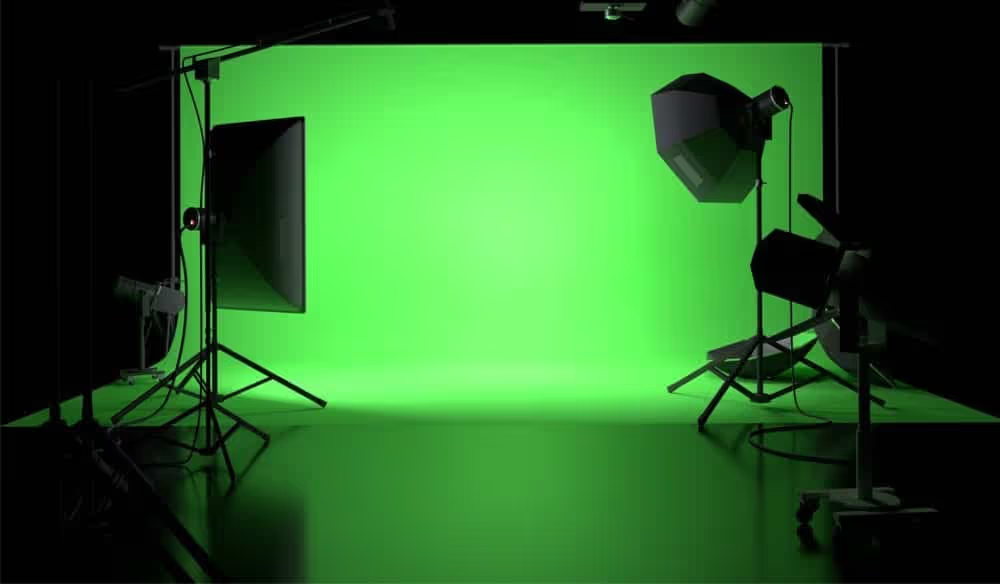
Table of Contents
Quick answer: A green screen is a solid green backdrop used in video production to enable background replacement in post-production. The talent is shot against the green, and the green is later "keyed out" by a compositor and replaced with a different background. Green is used because it is the color furthest from human skin tones, making it easier to isolate. In B2B corporate production, green screens are commonly used for executive interviews in studio, pharma webinars, virtual conferences, and any production where the talent needs to appear in an environment they cannot physically be in.
What a green screen actually is
A green screen is a backdrop made of fabric, painted wall, or paper, in a specific shade of bright saturated green (typically RGB 0-255-0 chroma green). The same technique using a blue backdrop is called blue screen, used less frequently in modern production but still standard for some applications.
The principle is simple. The camera captures the talent in front of the green. In post-production, software identifies the green pixels and replaces them with anything else: a static image, a video plate, a CGI environment, motion graphics. The talent appears to exist in the replaced environment.
When green screen is used in corporate B2B
Studio interviews with branded backgrounds
Most common use case. Executive interviews shot in a green screen studio, then placed against branded backdrops in post. Allows for consistent brand environment across executives shot in different locations.
Pharma webinars and KOL presentations
KOLs and presenters shot against green, then placed in branded virtual studio environments. Common for global pharma broadcasts where consistent brand environment is critical.
Virtual conferences and remote broadcasts
Multiple remote speakers shot against green at different locations, then composited into a shared virtual broadcast environment.
Product demonstrations
Talent demonstrating products against green, with the product environment or context added in post.
Internal training and e-learning
Instructor against green, with relevant educational content (screens, animations, infographics) composited around them.
Marketing video assets
Talent shot against green for use across multiple marketing assets where different backgrounds will be needed for different campaigns.
Green screen setup essentials
A clean green screen comp depends on the shoot day, not just the post work.
Even, flat lighting on the screen
The green needs to be lit evenly across its surface. Hot spots or shadows cause keying problems. Typically lit with separate softbox or LED panels just for the screen, separate from talent lighting.
Talent separation from the screen
The talent should be at least 2 meters from the green screen to prevent green light spilling onto the talent's hair, clothes, or skin. Green spill is hard to remove in post.
Matched lighting between talent and intended background
If the talent will be placed in a daylight environment, light them with daylight. If in a moody indoor environment, light them with moody indoor light. The lighting mismatch is the most common giveaway that footage is composited.
Wardrobe considerations
Talent must not wear green. Avoid bright reflective items that might pick up green spill. Avoid clothing with fine detail or hair that interacts badly with keying (fine wisps of hair, transparent earrings, etc).
Camera settings
Shoot with a codec that preserves enough detail for clean keying (ProRes, RAW, or H.265 at high bitrate). Highly compressed footage creates artifacts that make keying harder.
Resolution matters
Shoot at higher resolution than the final delivery. 4K footage delivered at 1080p gives the compositor headroom for clean edges.
Green screen versus virtual production
An alternative to green screen in 2026 is virtual production using LED walls (the technique popularized by The Mandalorian). Instead of green, the talent is shot in front of a giant LED screen displaying the virtual environment in real time. The camera captures the talent and environment together.
Virtual production advantages: lighting on the talent matches the environment because it actually is the environment lighting them. Reflections work naturally. No spill or compositing problems.
Virtual production disadvantages: significantly more expensive than green screen. Requires specialized stages with LED walls and tracking systems.
For B2B corporate work, green screen remains dominant because of the cost difference. Virtual production is used for premium brand work, product launches, and high-end commercial content.
Costs for green screen production
Green screen does not add huge cost on the shoot day. The studio rental might be slightly higher, but the gear and crew are largely the same.
The post-production cost is where green screen impacts budget:
- Simple green screen comp (talent in branded environment): 200 to 800 EUR per shot
- Complex comp (with VFX, custom backgrounds, multiple elements): 800 to 3,500 EUR per shot
- Multi-element comps with CGI integration: 2,000 to 10,000+ EUR per shot
Plan green screen comps in advance. A 5-second talking-head shot keyed against a brand backdrop is cheap. A 30-second product demo with the talent walking through a virtual factory is expensive.
When green screen is the right choice
- Studio interviews where multiple background variations are needed
- Productions where the actual location is unavailable, off-brand, or expensive
- Pharma webinars and broadcasts requiring consistent brand environment
- Multi-language productions where backgrounds need to be localized
- Productions where talent will appear across multiple campaigns with different contexts
When green screen is NOT the right choice:
- The actual location is itself the story (factory tours, executive offices, customer environments)
- Budget cannot accommodate the post-production overhead
- The talent moves around dynamically (keying complex motion is harder than keying static talent)
Get green screen production for your next shoot
Get Camera Crew has been producing green screen content for B2B corporate clients for 38 years across more than 45 countries. Our green screen productions cover executive interviews, pharma webinars, virtual conferences, and brand content for clients including AWS, Kaspersky, AstraZeneca, and Alcon.
To discuss your green screen production, request a proposal or download our Corporate Video Cost Guide.




.svg)