

Table of Contents
Details
Format: On-location podcast
Location: Two-story villa-style house, Winnipeg
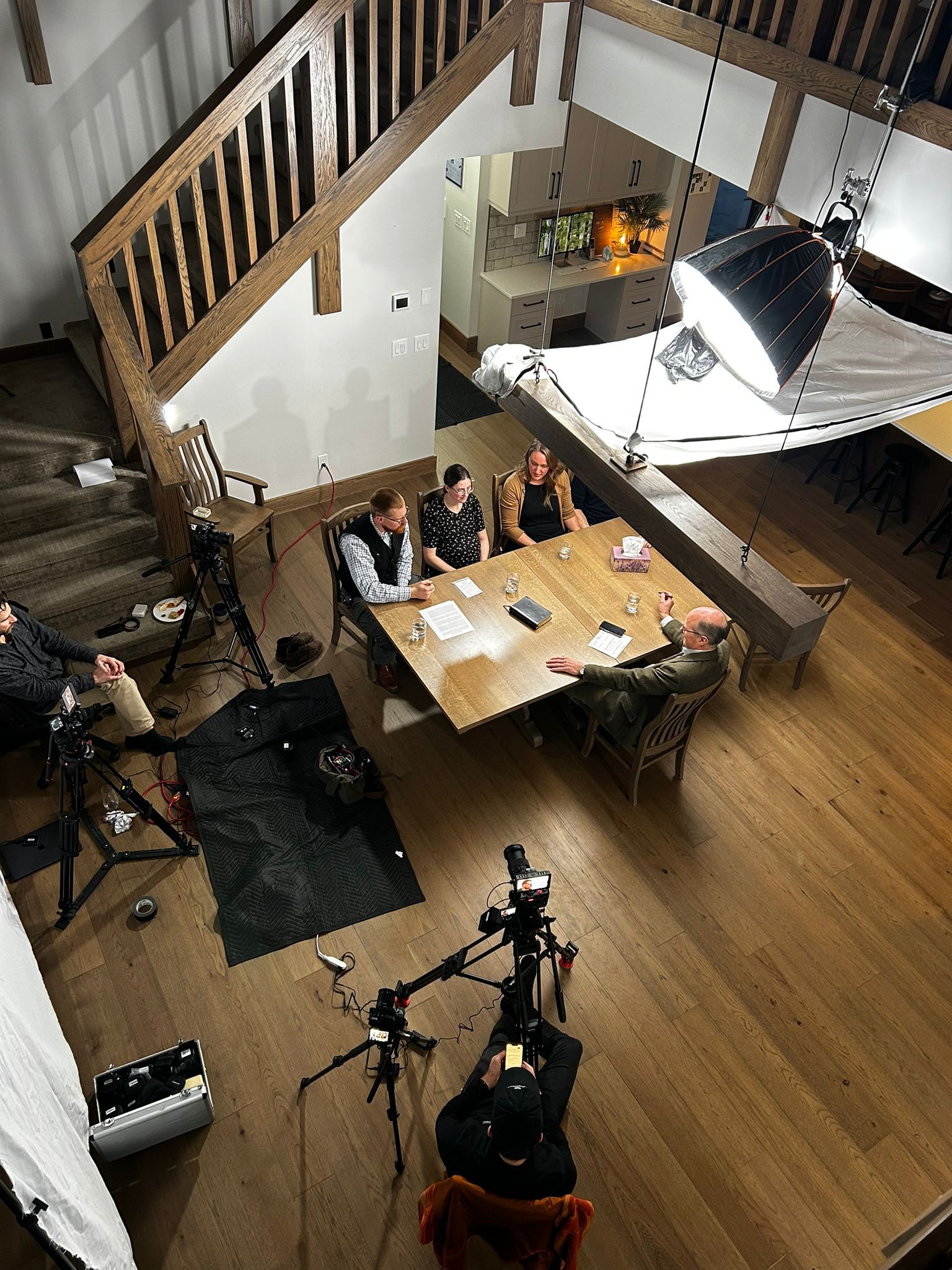
Crew: 2-person crew, 3-camera setup
Gear: 3 cameras, 5 lavalier mics
Output: Broadcast-ready, natural-light look, ready to deliver with no extra grading needed
Insights
Some of the best-looking footage we shoot doesn't come from a lighting kit, it comes from knowing how to read a room. For this on-location podcast shoot in Winnipeg, the space itself did most of the work: a two-story villa-style house with a wall of large windows, and a crew that knew exactly how to turn that into a set.
Before a single camera went up, the team walked the room and worked out the light. Rather than fighting the windows or covering them up, they used them as the main light source, shaping and controlling the daylight with diffusion, curtains, and muslin over the glass to soften it into something even and flattering. It's a different approach than rigging a full lighting package from scratch, and when the light is right, it reads as more natural on camera than anything built entirely from stands and fixtures.
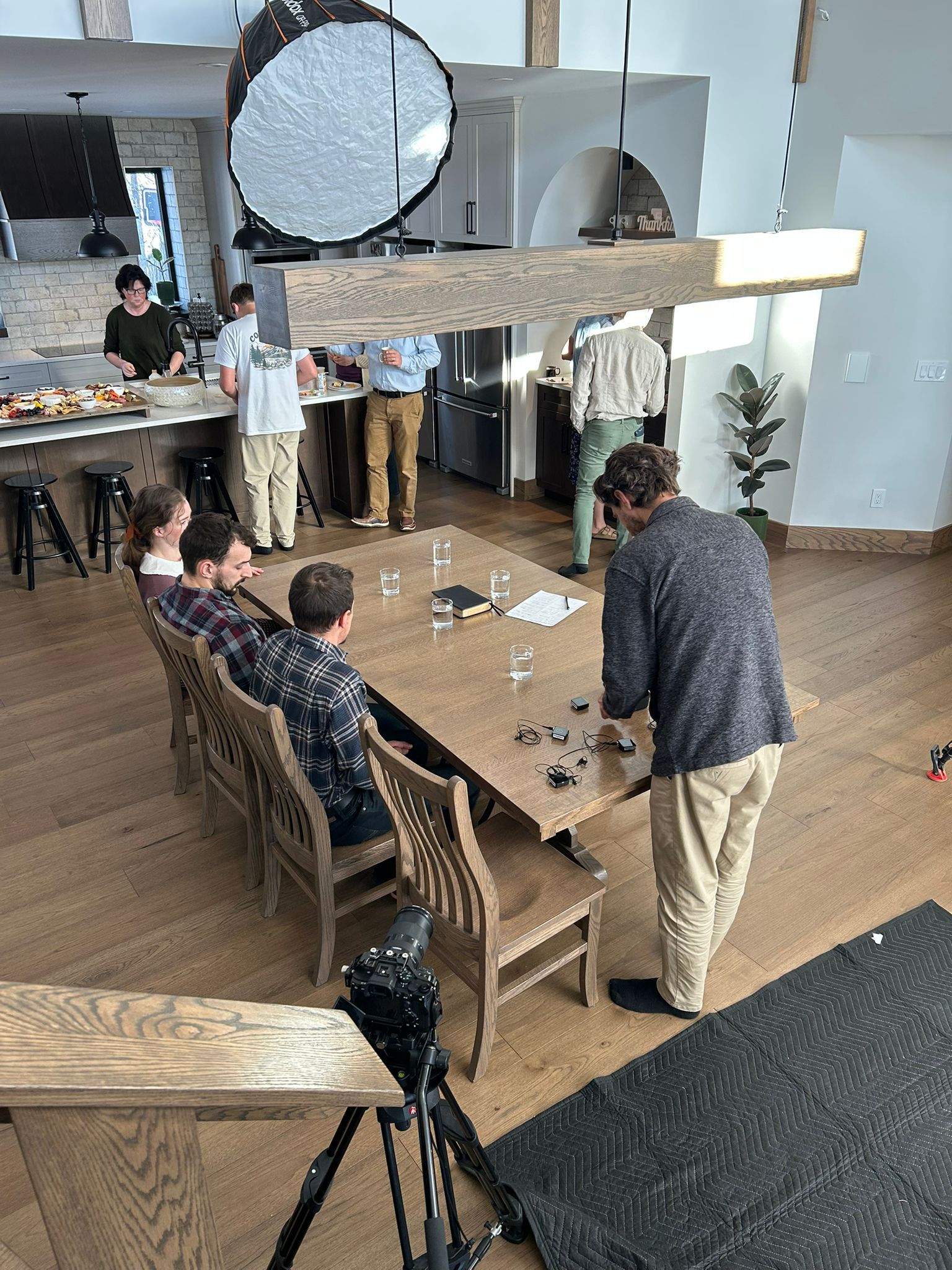
With the lighting solved using the room itself, a two-person crew ran a three-camera setup and five lavalier mics to cover the conversation from multiple angles, shooting clean, broadcast-ready color that didn't need heavy correction after the fact. That combination, a small footprint, strong technical coverage, and a lighting plan built around the location instead of against it, is what let the crew deliver a polished, cinematic look without turning a homeowner's living space into a construction site.
It's a good example of how we think about lighting in general: the goal isn't to bring the biggest kit, it's to read what a space is already giving you and build the look from there. A big window, done right, can outperform a truckload of fixtures, and it lets a lean crew move through a location fast without sacrificing how the final footage looks.


.svg)